- termite treatment
- soil poisoning
- pre-construction
- pest management
- South Africa
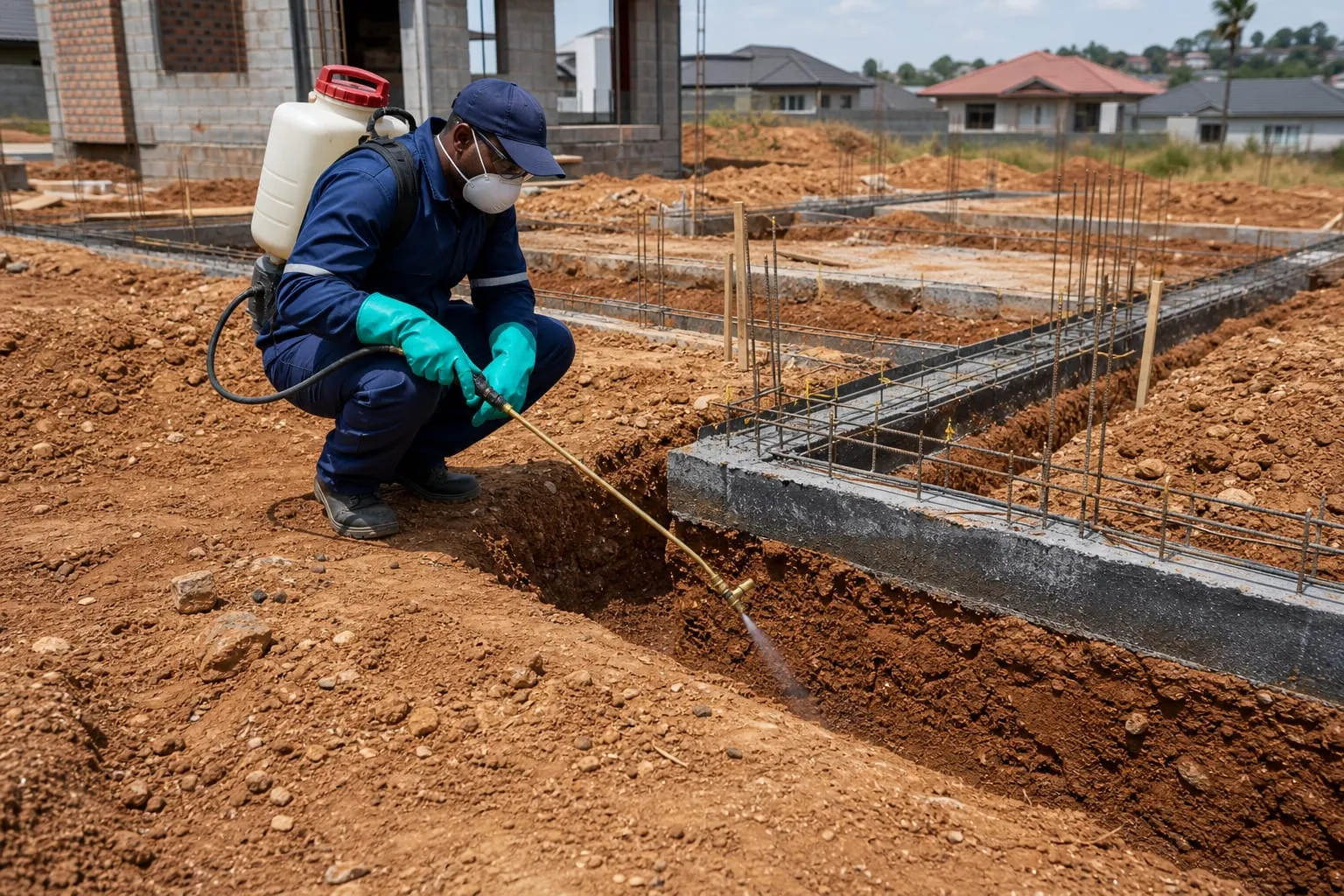
Many people only hear about soil poisoning when their builder asks for a termite certificate and the concrete slab is about to be poured. By then everything is moving quickly, and there is not much time to understand why it is needed. Soil poisoning is one of the most important steps in protecting a new building against termite damage. Knowing what it is and why it is done before construction begins can save time, money and future headaches.
What is soil poisoning for termites?
Soil poisoning is a preventative termite treatment carried out before a building’s concrete slab is poured. A registered termiticide is applied to the soil beneath and around the structure to create a protective barrier against subterranean termites. The idea is simple: termites live underground, and the treated soil helps prevent them from entering the building through the foundations. For the treatment to be effective, it needs to be applied correctly and provide continuous protection around the structure. That is why it is important to use experienced, qualified professionals who follow the correct application methods and current regulations.
Is soil poisoning required in South Africa?
In many areas of South Africa where subterranean termites are a risk, soil poisoning forms part of the building process and is carried out in accordance with the relevant building standards before the concrete slab is poured. Builders, inspectors or financial institutions may request a treatment certificate as part of the construction process, making it an important step for many new developments. If you are unsure whether your project requires termite protection, it is best to discuss it with your builder or a qualified pest management professional before construction reaches the slab stage.
How is soil poisoning carried out?
Every building site is different, so there is no one-size-fits-all approach. The treatment is carefully planned based on the property, the stage of construction and the type of termite risk present. Registered products are applied according to the manufacturer’s instructions and current regulations to create a protective barrier beneath and around the building. The success of the treatment depends far more on proper preparation and correct application than on simply applying a product. This is the core of our soil poisoning and termite treatment service.
Pre-construction vs post-construction termite treatment
The best time to protect a building against subterranean termites is before construction is complete. During the pre-construction stage, the soil is easily accessible, allowing a continuous protective barrier to be established before the slab is poured. This is generally the most effective and practical time to carry out the treatment. Once a building has been completed, termite protection can still be installed if needed. However, the process is usually more complex, because the foundations and surrounding areas are no longer fully accessible, and additional work may be required to establish protection around the structure. If you are building a new home or commercial property, arranging termite protection before the slab is poured is the easiest and most effective option. If you are weeks away from casting, WhatsApp us on 083 440 9952 with your slab date and we will work back from it.
Building soon? Get the barrier in before the concrete.
Pre-construction is the easiest and most effective time to protect a new build. WhatsApp 083 440 9952 with your slab date and we will work back from it.
WhatsApp for a quoteWhat about dry-wood termites?
Not all termites behave the same way. Subterranean termites live in the soil, which is why soil poisoning is an effective form of protection. Dry-wood termites, however, live entirely inside timber and do not require contact with the ground. Because of this, they require a different treatment approach. Depending on the severity of the infestation, solutions may include targeted timber treatments, fumigation or replacing badly damaged timber. A professional inspection is always the first step, as identifying the termite species ensures the correct treatment is recommended. The pre-treat and ongoing protection both sit inside our broader eco-first pest management programmes.
Protect your investment from the start
Termites can cause significant damage long before they become visible, which makes prevention far more effective than dealing with an established infestation. EcoPest provides professional termite inspections and pre-construction soil poisoning services to help protect homes, businesses and new developments. Our experienced technicians follow current industry standards and use registered products so every treatment is carried out professionally. If you are planning a new build or would like advice on termite protection, message us and we will assess your project and recommend the most appropriate solution before construction moves to the next stage.
Planning a new build? Protect it from the start.
We will assess your project and recommend the right termite protection before construction moves on. WhatsApp 083 440 9952 with your build details.
WhatsApp us now